
Table of Contents
- What Makes Botanical Skincare Different for Sensitive Skin
- Key Botanical Ingredients for Sensitive Skin
- How to Fix Dry Skin Naturally with Botanical Formulas
- Building a Clean Beauty Routine for Reactive Skin
- Top Botanical Skincare Products for Sensitive Skin
- Ingredients to Avoid When You Have Reactive Skin
- Patch Testing and Safe Transition Strategies
- Frequently Asked Questions
Last Updated: September 21, 2026
What Makes Botanical Skincare Different for Sensitive Skin
Most skincare is designed for transformation — exfoliation, cellular turnover, visible change at speed. Sensitive skin doesn’t respond well to that framework. Its barrier is already compromised, its reactivity threshold is lower, and introducing aggressive actives tends to worsen the underlying problem rather than solve it.
Botanical skincare for sensitive skin operates on a different principle: restoration before transformation. Soothing plant actives like heartleaf, cica, and blue tansy address the root mechanisms of reactive skin — transepidermal water loss, lipid barrier disruption, and chronic low-grade inflammation — without triggering the sensitization window that stronger actives require.
This isn’t a lower-efficacy approach. It’s a different target. Calming inflammation and reinforcing barrier function is the prerequisite for every other skincare goal — including brightening, anti-aging, and hydration — and it’s where reactive skin needs to start.
Key Botanical Ingredients for Sensitive Skin
Not all plant extracts work the same way for sensitive skin. Some are potent anti-inflammatories with documented soothing mechanisms. Others primarily hydrate. For reactive skin, the distinction matters: ingredients that calm and support barrier function take priority over those that stimulate or exfoliate.
Heartleaf and Cica: The Reactive Skin Essentials
Heartleaf (houttuynia cordata) contains flavonoids and quercetin that inhibit inflammatory mediators without requiring a skin adjustment period — a critical distinction for reactive skin that can’t tolerate a two-week purge cycle. Centella Asiatica (cica) works similarly, with the added benefit of asiaticoside and madecassoside compounds that directly stimulate ceramide production and support the lipid barrier. Both are suited to daily use on even the most reactive skin types.
The Heartleaf 80 Soothing Ampoule delivers 80% heartleaf water — a therapeutic concentration that produces visible redness relief rather than a cosmetic trace of the ingredient. Apply after cleansing and toning, then layer with moisturizer. The lightweight texture absorbs without feeling occlusive.

The Centella Collagen Toner Pads combine cica extract and hydrolyzed collagen in pre-soaked pads, simplifying the toning step while delivering barrier repair with each use.
Anti-Inflammatory Oils and Plant Extracts
Blue tansy (tanacetum annuum) contains chamazulene, a compound produced during steam distillation that gives it its deep blue color and its potent anti-inflammatory properties. It calms histamine-driven reactions and reduces skin temperature, making it particularly effective for heat-triggered redness and chronic flushing.
Tamanu oil promotes cellular regeneration and wound healing through calophyllolide, its active anti-inflammatory constituent, making it useful for post-breakout skin and compromised barrier repair. Sea buckthorn provides an exceptionally dense lipid profile — omega-3, -6, -7, and -9 fatty acids — that mirrors and replenishes the skin’s own sebum composition.
The Blue Beauty Cream combines grass-fed tallow, blue tansy, tamanu oil, and probiotics for microbiome-friendly overnight barrier repair. Tallow’s lipid profile closely resembles human sebum, allowing deep absorption without surface residue, while probiotics support a balanced skin microbiome that reduces chronic reactivity over time.
The SkinCeuticals Phyto Corrective Face Mask delivers concentrated botanical extracts and hyaluronic acid as a weekly intensive treatment — dermatologist-tested, hypoallergenic, and effective for acute reactivity or post-procedure recovery. Apply for 10–15 minutes, then remove or press remaining product into skin.
How to Fix Dry Skin Naturally with Botanical Formulas
Dry and sensitive skin frequently co-occur but require distinct treatment strategies. Dry skin lacks the lipid barrier that prevents moisture loss — it needs occlusive and emollient ingredients that physically restore what’s missing, not just water-binding actives.
Botanical formulas that address both conditions use a layered approach. Humectant botanicals (aloe vera, glycerin, hyaluronic acid from plant fermentation) draw water into the epidermis first. Emollient plant oils (rosehip, jojoba, chamomile) fill gaps in the lipid matrix and smooth surface texture. Occlusive botanicals (plant butters, sea buckthorn, tallow) seal the surface to prevent trans-epidermal water loss after humectants have drawn moisture in.
The practical sequence: hydrating toner or essence, serum with hyaluronic acid or glycerin, then a moisturizer rich in botanical oils and ceramide-analogues. For severely dry or sensitized skin, layer a heavier botanical cream at night when the barrier undergoes its most active repair cycle.
Building a Clean Beauty Routine for Reactive Skin
A clean beauty routine for reactive skin is built on two principles: barrier repair first, active ingredients second. Fragrance-free, minimal-ingredient formulas reduce the risk of cumulative irritation, and a fixed, predictable routine prevents the introduction of too many variables at once.
The Foundation: Gentle Cleansing Without Stripping
The cleanser determines what state your barrier is in for everything that follows. A harsh cleanser disrupts the acid mantle and strips lipids, making every subsequent product less effective and increasing reactivity. For sensitive skin, a non-foaming or low-foam, pH-balanced formula is non-negotiable.
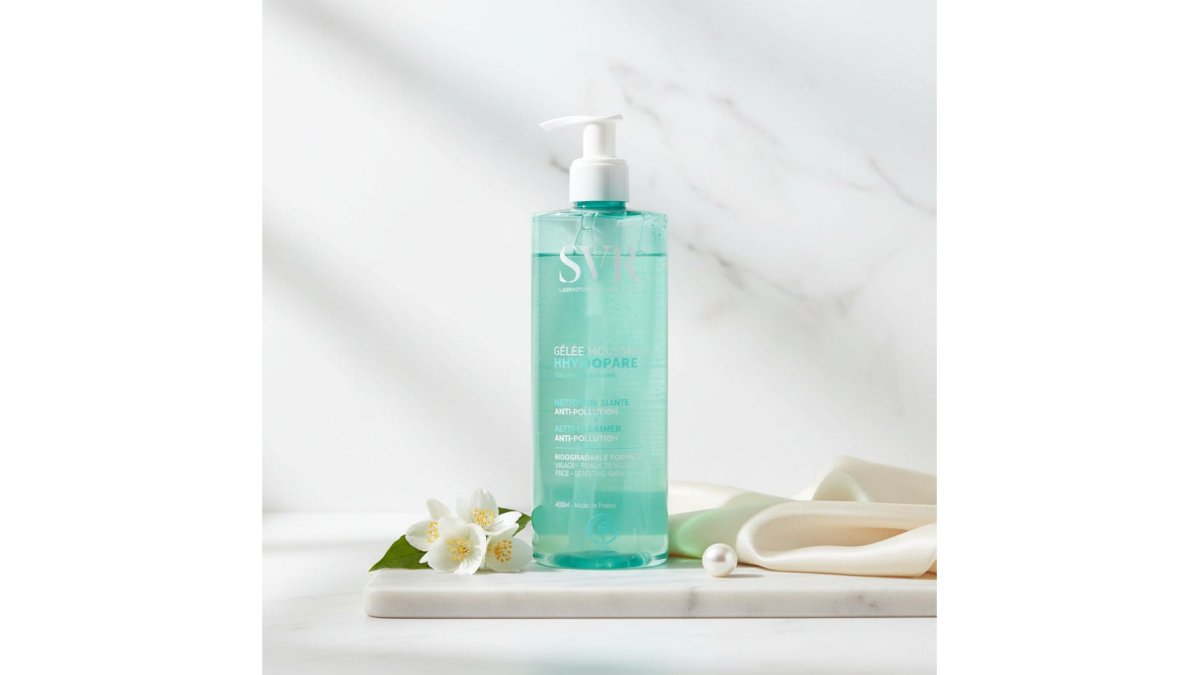
The SVR Physiopure Gentle Foaming Facial Cleanser transforms from gel to a soft, controlled lather that removes makeup, oil, and debris while maintaining moisture balance — skin feels soft rather than tight after rinsing. The CeraVe Hydrating Cleanser uses three essential ceramides and hyaluronic acid to cleanse while actively restoring barrier function — dermatologist-developed, fragrance-free, and non-foaming.

Layering Serums and Treatments for Maximum Comfort
After cleansing, build hydration and active support in layers — lightest texture first, richest last. Start with a hydrating toner or essence to restore pH and add the first layer of moisture to slightly damp skin. Follow with a targeted serum: for redness and reactivity, the Heartleaf 80 Soothing Ampoule; for combined redness and uneven tone, the Anua Azelaic Acid Serum uses a gentle, hydrating base that makes clinical-strength azelaic acid tolerable even on reactive skin.
Allow each layer a full 30–60 seconds to absorb before applying the next. Resist the temptation to layer multiple active serums simultaneously — on reactive skin, even individually gentle actives can combine to create irritation. One targeted serum per routine is the starting point.
Moisturizing and Barrier Repair
The moisturizer is where barrier repair is consolidated. For reactive skin, choose a formula rich in lipids and botanical soothing agents, free of fragrance, essential oils, and synthetic dyes. Look for ceramides, plant oils (jojoba, rosehip, squalane), and anti-inflammatory botanicals (cica, chamomile, allantoin) in the first half of the ingredient list.
For sensitive skin that is also dry, the Blue Beauty Cream provides deep overnight barrier repair with tallow, blue tansy, and probiotics. For skin that is reactive but not severely dry, a lighter cica-based cream or gel-cream applied morning and evening supports the barrier without heaviness.
Top Botanical Skincare Products for Sensitive Skin
When selecting botanical skincare for sensitive skin, look for products that combine proven soothing botanicals with barrier-supporting lipids, free of fragrance and common irritants. The products below address specific roles in a sensitive skin routine — layered together, they cover the full spectrum from daily soothing to intensive weekly repair.
Heartleaf 80 Soothing Ampoule: Fast-Acting Redness Relief
The Heartleaf 80 Soothing Ampoule delivers 80% heartleaf water for therapeutic-level redness relief, sebum balancing, and barrier support. The lightweight, fast-absorbing texture suits daily layering without heaviness or occlusion. Always follow with a hydrating toner or moisturizer to lock in the soothing benefits.
Available variants:
- Soothing + Redness Calming (10% Azelaic Acid)
- Soothing + Radiant Plumping (PDRN & Hyaluronic Acid)
- Soothing + Glow (10% Niacinamide)
Blue Beauty Cream: Microbiome-Friendly Barrier Repair
The Blue Beauty Cream Soothing Tallow Face Cream is a deeply restorative overnight cream for sensitive, reactive, and redness-prone skin. Grass-fed tallow, blue tansy, tamanu oil, and live probiotics work together for comprehensive barrier repair — tallow’s sebum-like lipid profile absorbs deeply without surface heaviness, while probiotics reduce chronic microbiome-driven reactivity with consistent use.
Centella Collagen Toner Pads: Post-Procedure Recovery
The Centella Collagen Toner Pads combine cica extract and hydrolyzed collagen in pre-soaked pads — ideal for sensitive, acne-prone, or post-procedure skin that needs barrier support without friction. Swipe morning or evening; no separate toner or cotton pad required.
SkinCeuticals Phyto Corrective Mask: Clinical Soothing
The SkinCeuticals Phyto Corrective Face Mask is a premium intensive weekly treatment combining concentrated hyaluronic acid and botanical extracts. Dermatologist-tested and hypoallergenic across all skin types. Apply for 10–15 minutes and use 1–2 times per week depending on reactivity level.
| Product | Price | Best For | Key Benefit | Format |
|---|---|---|---|---|
| Heartleaf 80 Soothing Ampoule | $27.99 | Daily soothing | Fast redness relief | Lightweight serum |
| Blue Beauty Cream Soothing Tallow Face Cream | $44.99 | Overnight repair | Barrier support | Rich cream |
| Centella Collagen Toner Pads for Sensitive Skin | $46.99 | Post-procedure | Healing acceleration | Pre-soaked pads |
| SkinCeuticals Phyto Corrective Face Mask | $168.38 | Weekly intensive | Clinical hydration | Treatment mask |
Ingredients to Avoid When You Have Reactive Skin
Reactive skin has a lower irritation threshold than most people realize — and many common cosmetic ingredients that are considered safe for normal skin are documented triggers for sensitized or compromised barriers. The main categories to avoid:
- Synthetic fragrances and parfum: the most common contact allergen in skincare. Present in many products not marketed as fragrance products.
- Essential oils: lavender, citrus, eucalyptus, peppermint, and rose oil are frequent sensitizers — natural origin does not mean non-reactive.
- Alcohol (denat.): disrupts barrier lipids and accelerates trans-epidermal water loss.
- Sulfates (SLS, SLES): surfactants that strip the acid mantle and compromise the lipid barrier integrity.
- High-concentration actives: retinol, strong AHAs, and vitamin C at high percentages require adjustment periods that sensitized skin cannot tolerate — introduce only after the barrier is stabilized.
- Formaldehyde-releasing preservatives: DMDM hydantoin, diazolidinyl urea, and imidazolidinyl urea are documented allergens that appear in some otherwise gentle-marketed products.
Patch Testing and Safe Transition Strategies
Patch testing is the only reliable way to identify product compatibility before committing to full-face application. Many reactions — particularly contact dermatitis — develop over 24–72 hours rather than immediately, making a proper protocol essential for reactive skin.
Patch test protocol for sensitive skin:
- Step 1 — Choose a test site: Apply a small amount of product to the inside of your forearm or behind your ear. These areas replicate facial skin sensitivity reasonably well and are easy to monitor.
- Step 2 — Wait 24 hours minimum: Do not wash the area during this period. Check at 24 and 48 hours for redness, swelling, itching, or bumps. Some reactions appear at 72 hours.
- Step 3 — Test one product at a time: Never patch test multiple new products simultaneously — if a reaction occurs, you won’t know which product caused it.
- Step 4 — Introduce to routine slowly: Even after a clean patch test, begin with every-other-day use on the face for the first week before daily application. This reduces cumulative exposure as your skin adjusts.
When transitioning to a new routine, maintain your current products while introducing new ones one at a time — leave two weeks between each new addition. This methodical approach makes it possible to identify exactly which products your skin responds well to, and which cause problems.
Frequently Asked Questions
What botanical ingredients are best for sensitive skin?
Heartleaf (houttuynia cordata), centella asiatica (cica), blue tansy, chamomile extract, and aloe vera are among the most effective botanical ingredients for sensitive skin. These plants contain anti-inflammatory compounds that calm redness, reduce reactivity, and support the skin barrier. The Heartleaf 80 Soothing Ampoule delivers 80% heartleaf water to intensely soothe irritation, while the Blue Beauty Cream combines blue tansy with grass-fed tallow to repair compromised barriers. Always patch test new botanicals first, as individual sensitivities vary.
How do I know if a botanical skincare product is safe for my sensitive skin?
Look for products that are hypoallergenic, dermatologist-tested, fragrance-free, and formulated without common irritants like synthetic fragrances, sulfates, and essential oils. Check the ingredient list for known soothing botanicals and avoid products with formaldehyde-releasing preservatives.
Perform a patch test on a small area (behind your ear or inner arm) for 24–48 hours before full application. The SVR Physiopure Gentle Foaming Cleanser is specifically developed for sensitive skin and maintains the barrier during cleansing. If irritation occurs, discontinue use immediately.
Are botanical skincare products better than synthetic ones for sensitive skin?
Botanical skincare can be gentler and less likely to trigger reactions in sensitive skin, but formulation quality matters more than the natural label. A well-formulated botanical product with proven anti-inflammatory actives like heartleaf or cica can be highly effective. However, some synthetic ingredients — hyaluronic acid and ceramides in particular — are essential for barrier repair and hydration. The best approach combines botanicals for soothing with clinical ingredients for barrier support, as seen in the Centella Collagen Toner Pads, which pair cica extract with hydrolyzed collagen for comprehensive sensitive-skin care.
What should I avoid in skincare if I have reactive skin?
Avoid synthetic fragrances, essential oils, alcohol (denat.), sulfates, and high concentrations of active ingredients like retinol or strong acids when your skin is actively reactive. Avoid physical exfoliants and abrasive cleansing tools. Focus on gentle, barrier-supporting formulas instead. The CeraVe Hydrating Cleanser avoids these irritants while restoring barrier ceramides, and the Anua Azelaic Acid Serum uses a hydrating base that makes clinical-strength azelaic acid tolerable for reactive skin.
How can I transition to a botanical skincare routine safely?
Introduce new botanical products one at a time, waiting at least two weeks between each addition to isolate any reactions. Start with a gentle cleanser like the SVR Physiopure, then add a soothing serum such as the Heartleaf 80 Soothing Ampoule. Patch test each product behind your ear first.
Keep your initial routine minimal: cleanser, serum, moisturizer, and SPF. Once your skin tolerates this baseline, gradually layer in treatments like the Centella Toner Pads or the SkinCeuticals Phyto Corrective Mask. This methodical approach identifies which botanicals work for your specific skin.
Experience considered care for sensitive skin. Enjoy 15% off your first protocol with code FAWN15.