
Table of Contents
- What Causes Dry Skin and Why It Needs More Than Lotion
- Step 1: Switch to a Gentle Cleanser and Warm Water
- Step 2: Apply a Humectant, Emollient, or Occlusive Moisturizer Immediately
- Step 3: Try an Oatmeal Bath or Natural Home Remedy
- The Best Natural Oils for Dry Skin (and How to Use Them)
- How to Hydrate Skin From the Inside Out
- Lifestyle Changes for Dry Skin Relief That Actually Help
- When to See a Dermatologist for Dry Skin
- Frequently Asked Questions
Last Updated: September 15, 2026
What Causes Dry Skin and Why It Needs More Than Lotion
Dry skin, clinically called xeroderma, happens when the skin barrier — the outermost layer of the epidermis — stops holding water. When its lipids thin out, water evaporates faster than the body can replace it, a process called transepidermal water loss. This guide breaks down how to fix dry skin naturally, from cleansing and moisturizing to oils, nutrition, and lifestyle habits.
Understanding Your Skin Barrier
The skin barrier works like a brick wall: skin cells are the bricks, and lipids — including ceramides and fatty acids — are the mortar. When harsh soaps, cold air, or hot showers crack that mortar, moisture escapes and irritants get in, which is why flaky skin, itchy skin, and irritation often appear together. Repairing the lipid barrier, not just adding surface moisture, is the goal.
Step 1: Switch to a Gentle Cleanser and Warm Water
The fastest fix for dry skin starts with what you wash with. A gentle cleanser without sulfates or fragrance strips less of the barrier's natural oils, and warm water removes dirt without the heat that accelerates moisture loss.
- Choose a fragrance-free, hypoallergenic cleanser labeled for sensitive skin
- Keep showers under ten minutes
- Pat skin dry with a soft towel instead of rubbing
- Apply your first product within three minutes of toweling off
Damp skin absorbs moisturizer more effectively, so timing matters.
Step 2: Apply a Humectant, Emollient, or Occlusive Moisturizer Immediately
Moisturizers fall into three categories, and dry skin usually needs more than one. A humectant (glycerin, hyaluronic acid) pulls water into the skin. An emollient (shea butter, squalane) smooths rough patches and softens flaky skin. An occlusive (petroleum jelly) seals everything in.
How to Layer Moisturizers for Maximum Hydration
Apply in this order, while skin is still damp:
- Humectant first, to draw in hydration
- Emollient second, to smooth and condition
- Occlusive last, especially at night, to lock it all in
A common mistake is using only an occlusive: with no water underneath, you are sealing in dryness. Layer the humectant first and the occlusive becomes far more effective.
Step 3: Try an Oatmeal Bath or Natural Home Remedy
Colloidal oatmeal is one of the few natural remedies with real backing for itchy, irritated skin — it calms inflammation and supports the barrier. Blend plain rolled oats into a fine powder, stir a cup into lukewarm bathwater, and soak for ten to fifteen minutes.
Other options that many people find helpful:
- A thin layer of raw honey left on for ten minutes before rinsing
- Cool compresses on itchy patches to reduce the urge to scratch
- A humidifier running overnight in the bedroom
The Best Natural Oils for Dry Skin (and How to Use Them)
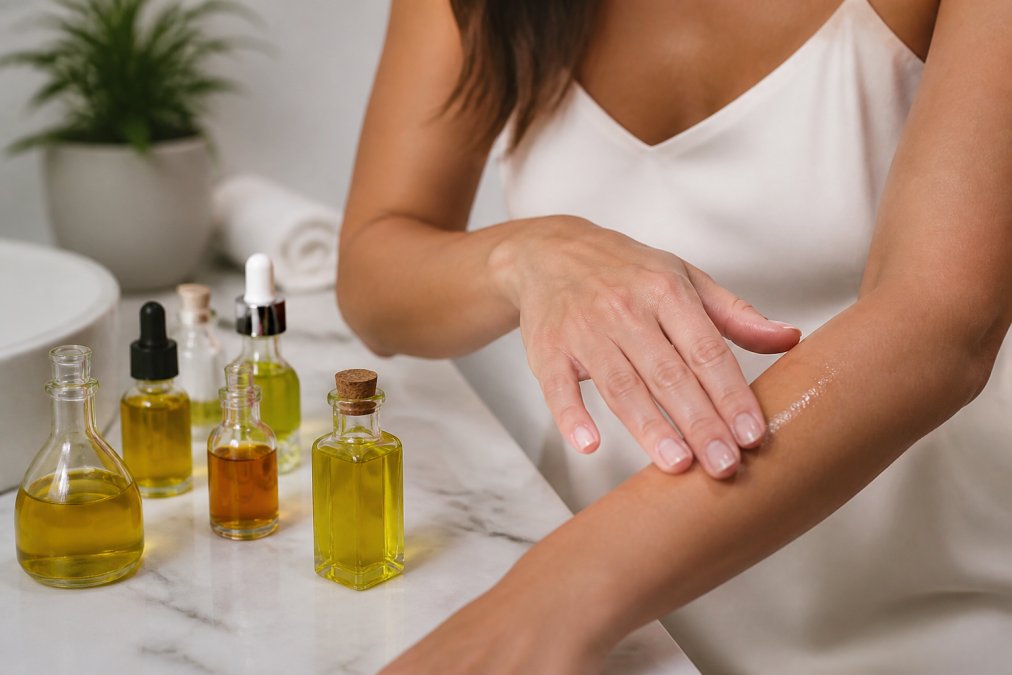
The best natural oils for dry skin are high in linoleic acid, low in oleic acid, and low on the comedogenic scale — pressed into damp skin within three minutes of toweling off. The fatty-acid profile matters more than the brand: linoleic acid reinforces the lipid mortar between skin cells, while oleic acid, dominant in olive and coconut oil, can sit on top of the barrier instead of integrating.
How to Read an Oil Before You Buy It
Two numbers tell you most of what you need to know:
- Linoleic-to-oleic ratio. Oils with more linoleic acid than oleic acid (sunflower, safflower, rosehip, grapeseed) tend to absorb quickly and suit acne-prone or combination skin. Oils with more oleic acid (olive, coconut, avocado, marula) are richer and better for the body, mature skin, or very dry patches.
- Comedogenic rating. This is a 0–5 scale for how likely an oil is to clog pores. Ratings of 0–2 are generally considered safe for facial use; 3–5 are better reserved for the body.
A Practical Oil Reference
| Oil | Dominant Fatty Acid | Comedogenic Rating | Best For |
|---|---|---|---|
| Sunflower seed | Linoleic | 0 | Face, sensitive skin, eczema-prone patches |
| Safflower | Linoleic | 0 | Face, oily-but-dehydrated skin |
| Rosehip seed | Linoleic | 1 | Face, dull or mature skin |
| Grapeseed | Linoleic | 1 | Face, acne-prone skin |
| Jojoba | Wax esters (not a true triglyceride) | 2 | Face and body, closest to human sebum |
| Sweet almond | Oleic | 2 | Body, normal-to-dry skin |
| Avocado | Oleic | 2–3 | Body, very dry or cracked skin |
| Coconut | Lauric (behaves like oleic) | 4 | Body only for acne-prone skin |
| Olive | Oleic | 2–3 | Body, but irritating for some sensitive skin |
Ratings are approximate and vary by source and refinement level.
How to Apply Oil So It Actually Absorbs
Application method determines how much benefit you actually get. Oil applied to dry skin sits on the surface and feels greasy. Oil applied correctly becomes part of the barrier.
- Apply to damp skin. Right after patting — not rubbing — dry from a shower or rinse, while the skin surface still holds some water. The oil seals that moisture in rather than competing with it.
- Use 3–5 drops for the face. More is not better. Excess oil does not absorb — it sits on top, clogs pores, and transfers to your pillow. Warm the drops between your palms and press gently into skin.
- Sequence correctly. If you use a serum, apply oil after it. If you use a heavy cream as your occlusive, apply oil underneath it. Oil is an emollient, not an occlusive, so it works in the middle of your routine — not necessarily last.
- Give it 60–90 seconds. Before layering anything on top, let the oil settle. Rushing immediately to the next product pushes the oil around rather than letting it integrate.
Oils to Approach With Caution
Not every oil marketed for dry skin is suitable for every person. Some of the most widely recommended oils carry real caveats worth knowing before you buy:
- Coconut oil has a comedogenic rating of 4 — high enough to cause breakouts on the face for acne-prone and combination skin types. It works well on the body and hair but should be kept away from the face unless your skin tolerates it specifically.
- Olive oil is rich in oleic acid, which can disrupt the skin barrier for people with eczema or atopic dermatitis. Despite its reputation as a natural remedy, several studies suggest it may worsen rather than help barrier-compromised skin.
- Essential oils (lavender, peppermint, eucalyptus, citrus) are not carrier oils and should never be applied undiluted. They can cause photosensitivity, chemical burns, or allergic contact dermatitis. Always dilute to 1–2% in a carrier oil.
- Tree-nut oils (tamanu, sweet almond, macadamia) require extra caution if you have nut allergies. Patch testing is particularly important here.
How to Hydrate Skin From the Inside Out
Topical products treat the surface. What you eat and drink determines the raw material available to build and repair your skin barrier. For people with persistent dry skin, addressing both sides together consistently outperforms topical-only approaches.
Water: How Much, and Why Timing Matters
What matters more than total volume is consistency. Drinking a large amount once a day does less for skin hydration than spreading intake throughout waking hours. Dehydration affects the skin last — by the time you feel thirsty, your skin is already responding.
- Aim for steady intake across the day, not one large dose in the evening
- Start the morning with water before caffeine, which is mildly diuretic
- Increase intake in low-humidity environments, heated rooms, or during exercise
- Electrolytes (sodium, potassium, magnesium) help cells retain water — plain water without minerals is less effective for barrier hydration in some people
A practical marker: urine should be pale yellow by mid-morning. Consistently dark urine signals chronic underhydration that will show on your skin.
The Nutrients That Build the Skin Barrier
| Nutrient | What It Does | Food Sources |
|---|---|---|
| Omega-3 fatty acids (EPA and DHA) | Support the lipid barrier and help calm inflammation | Salmon, sardines, mackerel, walnuts, flaxseed, chia seed |
| Omega-6 (linoleic acid, GLA) | Precursor to ceramides in the skin barrier | Sunflower seeds, safflower oil, evening primrose oil, borage oil |
| Vitamin E | Fat-soluble antioxidant that protects barrier lipids from oxidation | Almonds, sunflower seeds, wheat germ, avocado, spinach |
| Vitamin C | Required for collagen synthesis and a cofactor in barrier lipid production | Bell peppers, citrus, kiwi, broccoli, strawberries |
| Zinc | Supports skin repair and immune function | Oysters, beef, pumpkin seeds, lentils, chickpeas |
| Vitamin A (from beta-carotene) | Supports skin cell turnover | Carrots, sweet potato, spinach, kale |
| Polyphenols | Antioxidant support, may reduce oxidative stress on skin | Green tea, berries, dark chocolate (70%+), olive oil |
What to Cut Back On
Several common dietary habits directly worsen dry skin by depleting barrier-supporting nutrients or accelerating water loss:
- Alcohol is a diuretic and a vasodilator — it increases fluid loss and causes temporary surface flushing that can worsen chronic dryness over time. Even moderate regular intake can undermine the hydration work done during the day.
- High-sodium diets draw water out of cells systemically. Processed foods, fast food, and packaged snacks are the largest sources for most people — reducing them has a compounding effect on skin hydration.
- Refined sugar and high-glycemic foods trigger inflammation that degrades collagen and can compromise barrier function over time. This doesn't mean eliminating sugar, but reducing the daily baseline matters.
- Very low-fat diets deprive the skin of the fatty acids it needs to build ceramides. The skin barrier is made of fat — dietary fat restriction directly reduces the raw materials available for repair.
- Excess caffeine has a mild diuretic effect. It's not dramatic in moderate amounts, but if you're drinking multiple coffees a day without compensating with water, it contributes.
Seasonal Adjustments
Dry skin is often worse in winter not just because of cold air outside, but because of low-humidity heated air inside. The body's hydration needs change with the season, and so does the skin's external environment.
- Winter: Increase dietary omega-3s and fat intake slightly to support barrier lipid production. Reduce hot shower duration. Run a humidifier at 40–50% humidity indoors. Switch to a heavier occlusive at night.
- Spring/Fall transition: Watch for sudden dryness during the first weeks of heating season — indoor humidity can drop from 50% to 20% almost overnight when central heat turns on. Have a heavier moisturizer ready before symptoms start.
- Summer: Air conditioning removes humidity just as effectively as cold air. If you work in a climate-controlled office, reapply a light emollient midday and increase water intake.
- Year-round: Consistent omega-3 and zinc intake matters more than seasonal changes to topicals. Build the dietary foundation first; adjust topicals around it.
A Note on Supplements
Supplements can fill genuine gaps, but they should follow from a real dietary assessment — not replace a varied diet or act as a shortcut. The most evidence-supported supplements for skin barrier function are:
- Omega-3 fish oil (EPA and DHA): the most consistent evidence for reducing transepidermal water loss and improving skin hydration in people with dry or eczema-prone skin. Look for 500–1000mg EPA+DHA combined per day from a third-party tested source.
- Evening primrose oil or borage oil: sources of GLA (gamma-linolenic acid), an omega-6 that supports ceramide synthesis. Often used alongside omega-3 rather than instead of it.
- Collagen peptides: some evidence for improved skin hydration and elasticity at 2.5–10g per day, though effects are modest and depend on baseline collagen status.
- Zinc: relevant if you eat a plant-forward diet, since phytates in grains and legumes reduce bioavailability of dietary zinc. A modest dose of 8–11mg per day is sufficient for most people.
Always check for interactions with any medications you take. Omega-3 at high doses can have blood-thinning effects, and vitamin A supplementation carries toxicity risk at doses above the recommended daily allowance.
Lifestyle Changes for Dry Skin Relief That Actually Help
Beyond cleansing and moisturizing, the environment and daily habits your skin lives in determine how quickly the barrier can repair. The most effective lifestyle changes are also the least discussed, because they don't involve buying anything.
- Wear gloves for wet work. Dishwashing, cleaning, and frequent handwashing strip barrier lipids faster than almost anything else. Waterproof gloves for tasks longer than five minutes make a measurable difference in hand dryness.
- Switch to a non-biological laundry detergent. Enzyme-based detergents can leave residues on fabric that irritate sensitive or dry skin, particularly at night when your skin is in contact with sheets for hours.
- Lower your thermostat slightly. Heated air is dry air. Every degree you lower the thermostat increases relative indoor humidity. A setting of 68°F instead of 72°F is not dramatic for comfort but makes a real difference to barrier hydration overnight.
- Shower once a day, not twice. Each shower strips some of the skin's natural oils (sebum). Two showers a day doubles that loss. If you exercise in the morning and shower again at night, consider a rinse-only wash — warm water without cleanser — for one of them.
- Sleep on a silk or satin pillowcase. Cotton wicks moisture from the skin surface overnight. Silk and satin are less absorbent and generate less friction, which matters especially for the face and neck.
Seasonal Routines and a Humidifier
A humidifier is one of the highest-impact interventions for dry skin that most people overlook. Maintaining indoor humidity between 40% and 50% dramatically reduces transepidermal water loss, particularly overnight when skin is in repair mode and not being reapplied with products.
Practical setup:
- Place a cool-mist humidifier in the bedroom rather than the main living area — the hours of sleep are when it matters most
- Clean the tank every 3–5 days to prevent mold and bacterial growth, which can cause respiratory irritation
- Use a hygrometer (inexpensive, widely available) to confirm humidity is in the 40–50% range — guessing is not reliable
- In winter, run it every night; in summer, use air conditioning humidity settings or a smaller unit as needed
When to See a Dermatologist for Dry Skin
Most cases of dry skin respond to consistent routine changes within one to two weeks. When they don't, it's worth ruling out an underlying condition — eczema, psoriasis, hypothyroidism, and contact dermatitis all present with symptoms that overlap with simple dryness but require different treatment.
See a dermatologist if:
- Dryness is severe, cracked, or bleeding
- Symptoms persist after two consistent weeks of the routine changes above
- Itching is disrupting sleep
- You develop a rash, scaling, or oozing in addition to dryness
- Dryness appears suddenly with no environmental explanation
| Problem | Likely Cause | Fix |
|---|---|---|
| Flaky, tight skin after washing | Harsh cleanser or hot water | Gentle cleanser, warm water, moisturize within 3 minutes |
| Itchy, irritated patches | Compromised skin barrier | Oatmeal bath, occlusive at night, patch test new products |
| Dryness that returns by midday | Only using an occlusive | Layer humectant, then emollient, then occlusive |
| Winter flaking every year | Low indoor humidity | Humidifier at 40–50%, thicker night cream |
Frequently Asked Questions
How can I fix my extremely dry skin?
Start by switching to a gentle cleanser and warm water, then apply a moisturizer within three minutes of toweling off to seal in hydration. Look for products with humectants like glycerin, emollients like sunflower seed oil, and occlusives like petroleum jelly. For very dry, flaky skin, an oatmeal bath can calm irritation and support the barrier. If your skin stays rough or itchy after two weeks of consistent care, see a dermatologist to rule out dermatitis or another underlying condition.
What natural oils are best for deep skin hydration?
Sunflower seed oil and jojoba are the most broadly suitable oils for dry skin — both have low comedogenic ratings, absorb well, and are tolerated by most skin types. Rosehip seed oil is a good option for mature or dull skin. Apply any oil to damp skin immediately after bathing to limit transepidermal water loss, and use 3–5 drops pressed gently in rather than rubbed. Always patch test on the inner forearm for 24 hours first, since natural oils can still cause irritation in sensitive skin.
How does diet impact skin moisture levels?
What you eat and drink affects your skin barrier directly. Omega-3 fatty acids support the lipid layer that retains water in the skin, while vitamins C and E support collagen and protect barrier lipids from oxidation. Chronic underhydration, high alcohol intake, and very low-fat diets all weaken barrier function — making dry skin worse even if you moisturize consistently. Foods rich in healthy fats, antioxidants, and zinc support skin repair from the inside, and consistent water intake throughout the day matters more than total volume consumed at once.
Will dry skin eventually go away on its own?
Mild dry skin often improves with a consistent routine, but it rarely clears up by itself if you keep using harsh soaps, hot water, or skipping moisturizer. Dry skin is a sign your skin barrier needs active support — not a passing phase. With gentle cleansing, immediate moisturizing, and consistent hydration habits, most cases improve within one to two weeks. Persistent dryness, especially if accompanied by itching, cracking, or redness that spreads, warrants a dermatologist visit to rule out an underlying condition.
Dry skin rarely resolves with one product change. The routines that work long-term address the barrier from both sides — what goes on the skin and what goes into the body. The steps above give you a framework to work through systematically, so you can identify what's actually driving the dryness and fix it at the source. For reactive or barrier-compromised skin that needs a gentle starting point, the Blue Beauty Cream Soothing Tallow Face Cream — formulated with grass-fed tallow, blue tansy, and a probiotic blend — is designed to calm and restore without adding irritation.
Experience considered care for sensitive skin. Enjoy 15% off your first protocol with code FAWN15.